
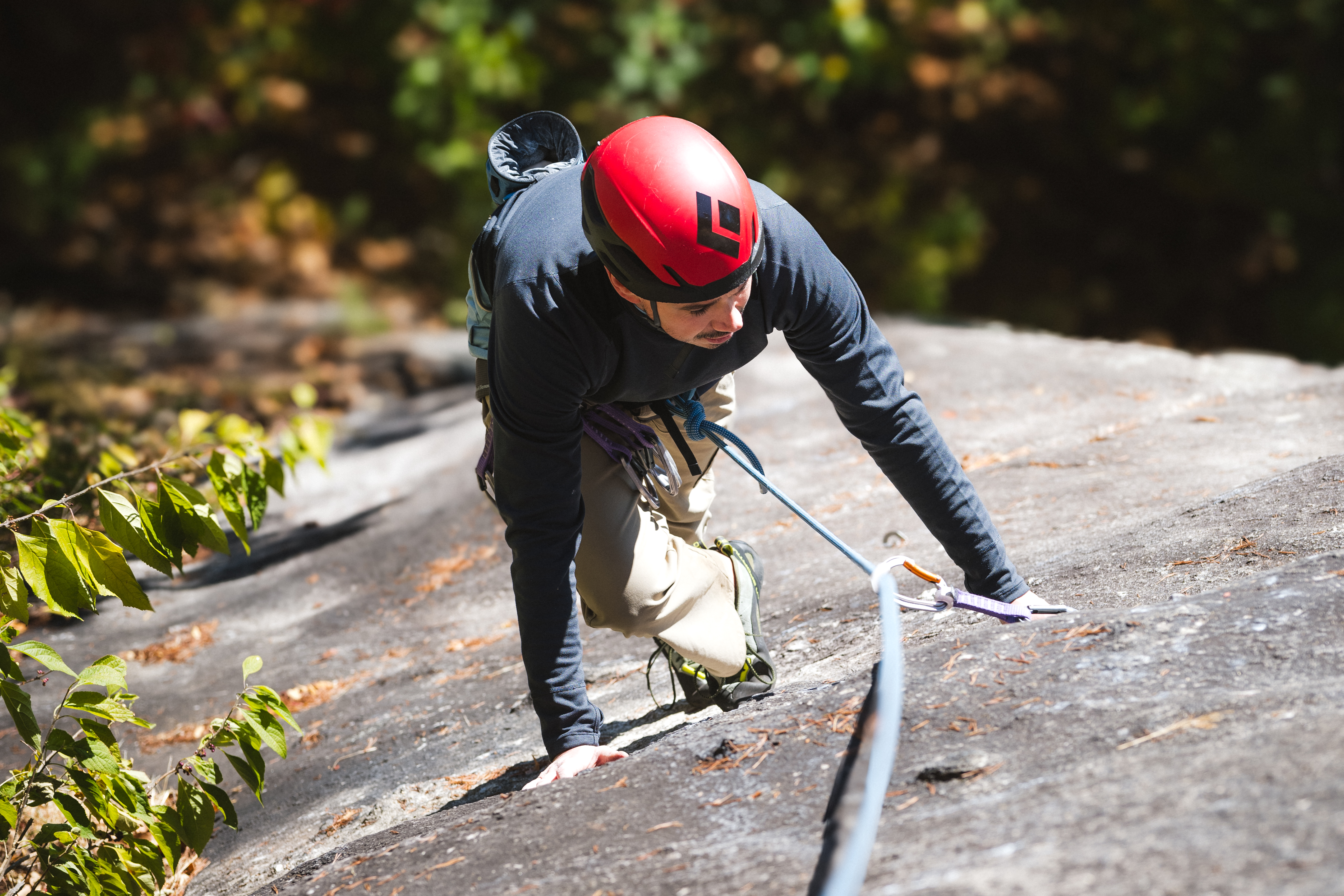
When I was a younger, less experienced man and did not think about the consequences of my actions, I almost never wore a helmet while climbing. I hated the feeling of a big bulky thing on my head, and most importantly, it just didn’t look “cool.” In my perspective, the pro climbers didn’t wear them, so why should I? Fast forward 13 years, a near miss and some growth in wisdom later, and I wear a helmet 95% of the time while rock climbing. So, what changed my mind, you ask? Let’s break it down a bit!
Let’s start by answering the question at hand: why do we wear helmets while climbing? The primary reason helmets were historically designed for climbers was to protect from falling objects and impact to the top of your head. Think rock fall, dropped gear, etc. As time has gone on, another factor to consider has become hikers or people who don’t have a clue about what’s below them when they are standing in high places. The Nose area at Looking Glass Rock comes to mind. I know people who have been hit by apples, other garbage, and even phones that have been thrown down or dropped from the top of the rock face by hikers! For this reason, wearing a helmet not only while climbing but also while belaying and even hanging out at the base of the cliff, just makes sense. I have heard countless stories from friends and guests who have shared what could have been life-threatening head injuries if they hadn’t been wearing a helmet! Up until a few years ago, we saw this hardhat resemblance in look, feel, and intention. Helmets did an excellent job at protecting this one specific part of your head, the top!
Thankfully, modern climbing helmets no longer resemble construction site attire and are becoming more like a hard hat mixed with a bike helmet. This means they are designed to take top impacts with some degree of additional protection from back and side-impact, depending on the model of climbing helmet you choose to wear.
As climbing has progressed, so has the risk we acknowledge with it! Yes, the primary reason we wear a helmet is still to protect us from falling rock, but we also recognize the risk of other impact potential while climbing. For example, if the rope gets caught behind your leg on a lead fall, flipping you upside down and causing you to smack the back of the head against the rock (this might sound ridiculous, but it’s actually fairly common while lead climbing in low angle or vertical terrain), or maybe a big swing results in side impact against the rock.
Some people may find climbing helmets aren’t necessary in certain circumstances. For example, rock fall risk in established climbing areas, say, the Red River Gorge in Kentucky, is generally very low. Popular sport climbing areas are typically “cleaned” of loose rock and other hazards before people are welcomed to climb the route or the area. Also, when climbing routes are steep and the fall will be clean and into open space the risk of hitting your head is almost non-existent. Helmets also can be an obstruction for certain types of climbing, in particular off-width crack and squeeze chimney climbing.

So, what changed my mind about wearing a helmet more or less full time?
In North Carolina we mostly have slab climbing or vertical climbing. Meaning if you were to fall, you will slam back into the rock creating some risk of hitting your head. When I was early on in my climbing career, I was climbing with a friend on “Zydago” at Rumbling Bald in Chimney Rock, NC. I took a fall early on the route, the rope wrapped around my leg and I fell headfirst towards a sharp boulder at the start of the route. When my rope came taught, my head was about 12 inches or so from the boulder. My partner said something along the lines of, “that’s why we wear helmets!”
An even more pertinent reason to wear a helmet is that in North Carolina, we have some of the best adventure climbing on the east coast! Rock fall comes with the territory, even with our superb rock quality! Simply put, helmets now resemble wearing a hat in comfort and offer a better range of protection, slimmer profile, and they even look cool! I now wear my Petzl Meteor or Sirocco helmet from traditional adventure climbing to steep sport climbing, and while belaying. Most of the time I can’t justify not wearing one!
Unfortunately, in climbing media it is still relatively “uncool” to wear a helmet while climbing. Many pro climbers are filmed not wearing a helmet and this reinforces the old stigma about climbing helmets not being cool. Let’s change the narrative! It is cool to wear a helmet, it is cool to protect yourself, it is cool to value longevity in the sport, it is cool to care about your friends and family and their feelings if you were to get injured! Wear your helmet.
Frequently Asked Questions
Can you keep using a climbing helmet after it’s been impacted?
Depending on the helmet and the impact. Some helmets may be designed for use after smaller impacts, while others should be retired after any impact. It’s important to always check the manufacturer recommendations for your specific helmet.
Where can I buy a climbing helmet in the Asheville area?
Black Dome Mountain Sports in Asheville is the best place for a more extensive range of climbing gear in the area. You can also check out the Asheville REI location.
What kinds of helmets are best for kids?
Most manufacturers make a child specific helmet. These helmets are smaller in form and offer the same protection as adult helmets with a better fit for kids. I recommend the Petzl Picchu for kids.
What helmet do you recommend for adults?
In my opinion, Petzl helmets have become the standard in helmet design and function. I highly recommend the Petzl Meteor/Meteora for the best all around helmet. For those who want the lightest weight helmet, I recommend the Petzl Sirocco. For those who want the most durable, I recommend the Petzl Borea/Boreo.
What kind of helmets does Guillard Climbing use?
We use Petzl Helmets. Specifically the Boreo, Meteor, and the Sirocco.
Can I wear a bike helmet while rock climbing?
One might think that a bike helmet would be suited for rock climbing use, but they are different in what they are designed to protect. A bike helmet is designed for impact from a variety of directions and offers better side protection, while a climbing helmet is designed to protect from top impact. Modern climbing helmets offer both back and side protection as well. I would not recommend wearing a bike helmet for climbing due to these differences.
How much does a climbing helmet cost?
Climbing helmets can range from $40- $170 depending on the model you choose.
What are the different types of climbing helmets?
There are a wide variety of climbing helmets on the market, all offering different levels of protection, durability, and comfort. Some helmets are designed to be “heavy duty,” other helmets are designed to be as lightweight as possible while still offering the full range of protection.